
Adult & Paediatric Neurology
Dr. Neha Pandey
GB Pant-trained neurologist, headache specialist and international scientific presenter, caring for neurological disorders across adulthood and childhood.
About
Neurology across age groups, with particular depth in headache medicine.
Dr. Neha Pandey is a consultant adult and paediatric neurologist trained at G. B. Pant Hospital (GIPMER), New Delhi. Her practice brings together headache medicine, epilepsy, autoimmune and demyelinating neurology, movement disorders, neuromuscular disease, stroke, dementia and neurological disorders of childhood.
Her prior MD training in Paediatrics adds particular depth to the assessment of childhood seizures, developmental concerns, weakness, movement disorders and headache. She also performs and interprets EEG, nerve-conduction studies, EMG, BERA and evoked potentials—connecting each test back to the clinical question.
Her research on non-headache symptoms across migraine phases was selected for an oral presentation at the International Headache Congress in São Paulo in 2025 and published as an abstract in Cephalalgia.
Neurology across childhood and adulthood
From childhood epilepsy and developmental disorders to adult migraine, autoimmune disease, neuropathy and movement disorders—care is shaped around the patient’s age, life and priorities.
Book paediatric neurology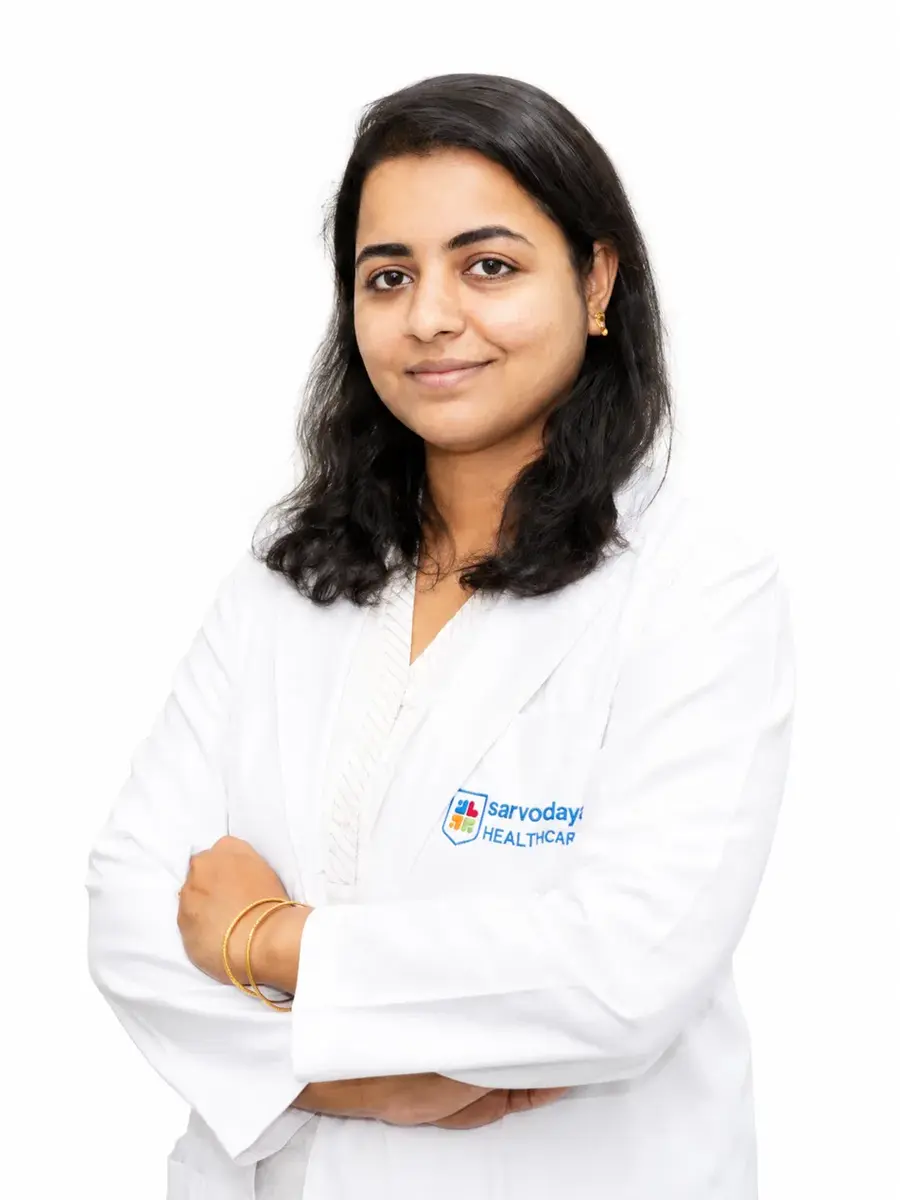
DM Neurology
IHC 2025 speaker
Training & practice
- MBBSMaulana Azad Medical College, New Delhi
- MD PaedsUniversity College of Medical Sciences, New Delhi · 2018–2021
- DM NeurologyG. B. Pant Hospital (GIPMER), New Delhi · 2022–2025
- Consultant Adult & Paediatric NeurologistPraneva Multispeciality Clinic, Sector 104
Clinical spectrum
The brain, nerves and muscles form one system. Her practice reflects that.
Expertise across age groups, with particular depth in headache medicine, autoimmune neurology and clinical neurophysiology.
Academic distinctions
Clinical expertise supported by research, teaching and recognised academic work.

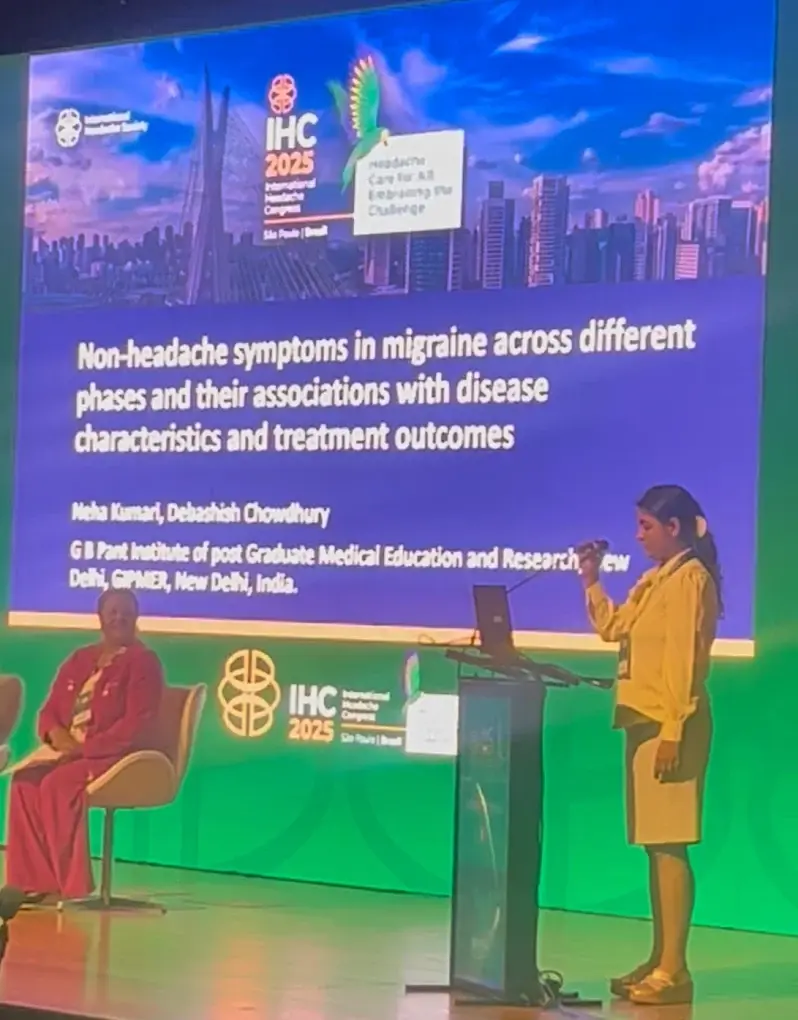
São Paulo · 2025
Selected oral presentation at the International Headache Congress.
“Non-headache symptoms in migraine across different phases and their associations with disease characteristics and treatment outcomes.”
The work examined symptoms beyond pain across migraine phases, connecting disease characteristics with treatment outcomes. It was presented internationally and published as an abstract in the Cephalalgia IHC 2025 supplement.
Areas of work
What people come in with
Headache and migraine
Chronic daily headache, migraine with and without aura, cluster headache and medication-overuse headache — including botulinum toxin therapy and nerve blocks when tablets are not enough.
Epilepsy and seizures
First seizure evaluation, EEG, drug selection and long-term monitoring, in adults and in children — including febrile seizures and childhood epilepsy syndromes.
Neuropathy and weakness
Numbness, tingling, burning feet, carpal tunnel syndrome, and weakness that needs nerve conduction studies to localise before it can be treated.
Movement disorders
Parkinson’s disease, tremor, dystonia and spasticity — including botulinum toxin injections for focal dystonia and post-stroke spasticity.
Memory and dementia
Assessment of memory complaints, distinguishing normal ageing from dementia, and practical guidance for the family who will be providing the care.
Children’s neurology
Developmental delay, seizures, hearing and vision pathway testing, and headaches in school-age children — assessed by someone trained in paediatrics as well as neurology.
Electrophysiology
Done here, in the clinic
Records the brain’s electrical activity through small sensors placed on the scalp. It is the core test in evaluating seizures and epilepsy, and is also used for unexplained blackouts and certain encephalopathies.
A routine EEG takes about thirty to forty minutes. Nothing is injected and nothing hurts. Come with clean, dry hair and no oil, and bring a list of current medicines.
The same test performed after a deliberately shortened night’s sleep, which makes abnormal electrical activity easier to catch. We will tell you exactly how much sleep to allow beforehand — the instruction matters, because an incorrectly prepared study often has to be repeated.
Nerve conduction studies measure how quickly and how strongly signals travel along a nerve; electromyography records the electrical activity of muscle through a fine needle. Together they localise the problem in numbness, tingling, weakness, carpal tunnel syndrome and suspected neuropathy.
Expect mild, brief electrical pulses. Most studies take thirty to sixty minutes depending on how many nerves need testing.
Tests the hearing pathway from the ear to the brainstem using clicks played through headphones. It is the standard test for hearing assessment in infants and small children who cannot cooperate with conventional audiometry, and is also used in adults for certain kinds of hearing loss and dizziness.
Small children are usually tested while asleep, and we will help you plan the timing around a nap.
Measures how the visual pathway conducts signals from the eye to the back of the brain. It is used when optic nerve involvement is suspected — in demyelinating conditions such as multiple sclerosis and optic neuritis, and in unexplained visual loss.
Injections used for chronic migraine, focal dystonia including cervical dystonia and blepharospasm, hemifacial spasm, and spasticity after stroke or in cerebral palsy. Effect takes a few days to appear and lasts around three months, so treatment is planned as a repeating cycle rather than a one-off.
Targeted local anaesthetic injections — most often greater occipital nerve blocks for occipital neuralgia and chronic migraine. The procedure takes a few minutes at the clinic and relief, when it works, is usually apparent the same day.
Sampling of cerebrospinal fluid from the lower back, used in suspected infection of the nervous system, demyelinating disease and certain headaches. Done under local anaesthetic with a fine needle, with clear aftercare instructions about lying flat and fluids.
Appointments
Start with a neurological assessment that listens before it labels.
WhatsApp is the fastest way to reach us — send your name and what the appointment is for, and someone from the clinic will confirm a time.